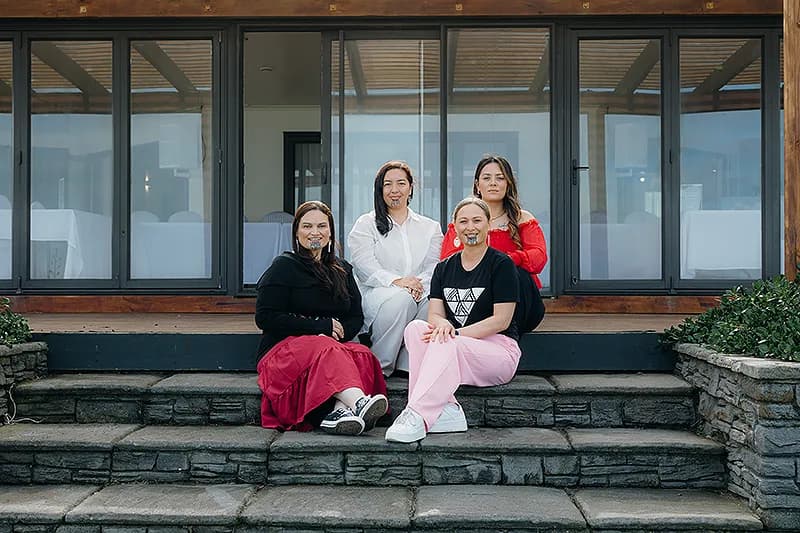
"What question am I the answer to?" It was pondering this profound thought, in the midst of a major upheaval in her own life, that led Aysha Peters on a bold new path.
Creating a collective that is helping to empower wāhine across the country is her response to a deep need in our nation, and one that she is uniquely placed to do.
From a childhood full of challenges, to becoming a mum at 19, Aucklander Aysha has overcome many circumstantial and systemic barriers to get to where she is today.
"Māia Collective is wāhine-led, and a kaupapa Māori organisation that centres on mana and creating culturally safe care that works across all groups and communities," Aysha explains.
In the 5 years since its inception, the programme has now supported and empowered more than 330 wāhine.
“It's like wāhine have been taken to the middle of the moana, thrown overboard and told to swim back to shore. But they've never been taught how to swim.”
Aysha's personal journey
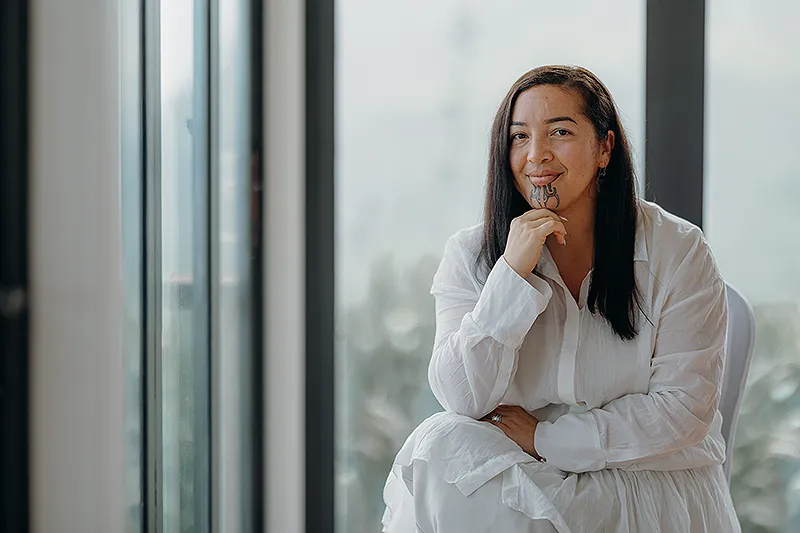
"My dad was part of the massive urban migration from Te Tai Tokerau to Tāmaki Makaurau when he was 15 years old. The legacy of colonisation had already disrupted rural communities through land loss, economic pressures and reduced opportunities. In the city, Māori often faced further challenges of marginalisation and disconnection."
"My mum whakapapas back to England and Scotland, and wealth was intergenerational, grounded in land and resources, and she grew up with many privileges and opportunities. So my parents were from two opposite worlds that collided."
The middle of 3 children, Aysha says, "Growing up in poverty, in a state-owned home, surrounded by mental health struggles, addiction, scarcity and stress felt normal. I didn't realise it wasn't. I also didn't understand the structural barriers that I was up against until adulthood."
Despite all of this, Aysha went to university as a young mum, encouraged by her grandmother, and graduated with a Masters in Marine Science. Within a few years, her marriage ended and she found herself as a single mother to two children. She was on her own for nearly 5 years before she met her now-husband; they're now a blended whānau with 5 children.
Strong support for single mothers
"The impact of wellness, or its absence, is intergenerational," explains Aysha. "I've always wanted to see wāhine well. Watching my mother struggle with mental ill-health left a mark on our whole whānau, and I know that when wāhine thrive, their wellbeing lifts generations."
As part of its services, Māia offers respite retreats for solo mothers – Puāwai noho – and a mentoring programme from wāhine to wāhine – Āwhinatanga.
"A lot of the wāhine come to us absolutely exhausted because they are carrying the load financially, emotionally and physically," Aysha says of the retreats. "Many of them have never heard of the grief cycle, so we teach them: if you've lost a relationship, or your job, or someone you love – any situation that you didn't choose or want – it's normal to feel these emotions."
Many of the wāhine then go on to be part of the 12-week mentoring programme – beginning as teina (mentees) before becoming tuakana (mentors) themselves. "We are a strengths-based kaupapa, so we aim to pull out inherent strengths and resilience that buffers the challenges in life. We teach self-care, boundary setting and time management, and we touch on trauma, finances, whānau and future vision, all under the framework of Te Whare Tapa Whā."
“You are the best kaupapa you will ever work on.”
Empowering wāhine for life
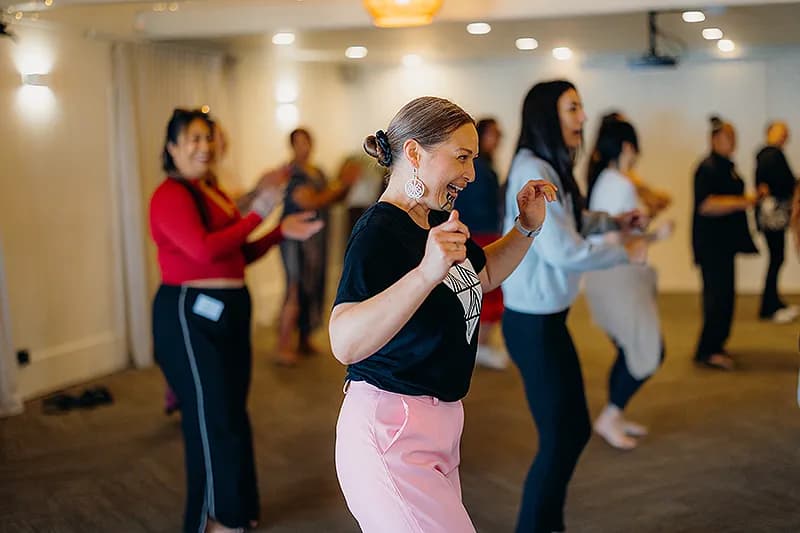
"All of our programmes are 100% self-referral. If people are made to come, then they're already being disempowered. They need to feel agency and that they have the ability to choose."
"Afterwards, lots of the wāhine who do the programme then want to start their own charities and their own trusts, so it's this beautiful little ripple effect."
On top of the in-person services, Māia has launched Whakaora – a bilingual meditation app with deep breathing for anxiety, visualisation tools, and support across grief, gratitude, and pregnancy + postnatal periods. All done in an Aotearoa context. Income from the app helps fund the programmes.
Māia Collective + MAS Foundation
Dr Julie Wharewera-Mika (Head of Foundation) says, "Māia Collective and Tūpuna Parenting embody the principles of Te Tikitiki a Taranga – promoting wellbeing through indigenous knowledge, equity and community-led action. Grounded in kaupapa Māori and Pasifika values, both initiatives centre te ao Māori and create culturally safe spaces to support whānau, wāhine and kaimahi."
Mafi Funaki-Tahifote (Head of Foundation) adds, "We are grateful to these two wāhine toa who, through their approach, unapologetically ensure participants' voices are empowered to surface. Their approach resonates with the Foundation's value of 'Tika, pono me te aroha' – which embraces the Samoan proverb 'E fofo e le alamea le alamea' (Let the issues within a community be resolved by those in the community)."
“How are your most vulnerable? Because only when everyone is well, can we truly say the nation is well.”
E rere ana te mihi ki a MAS Foundation. This partnership is helping to create a healthier Aotearoa by building the prevention infrastructure our communities need to thrive. Together, we are strengthening the foundations for intergenerational wellbeing for whānau across Aotearoa.
Māia Collective – MAS Foundation feature
Māia Collective – Facebook reel
Originally published by

#māiacollective · #masfoundation